The Upper 25 Miles to Indian Creek (Mile 24.7)
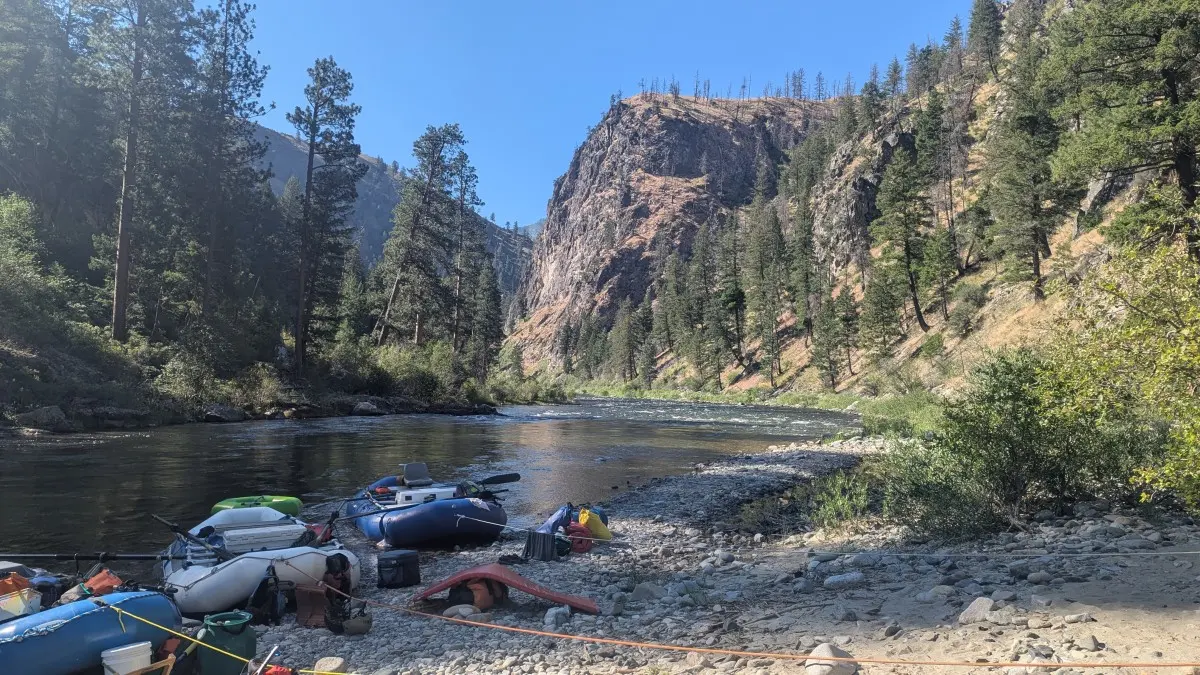
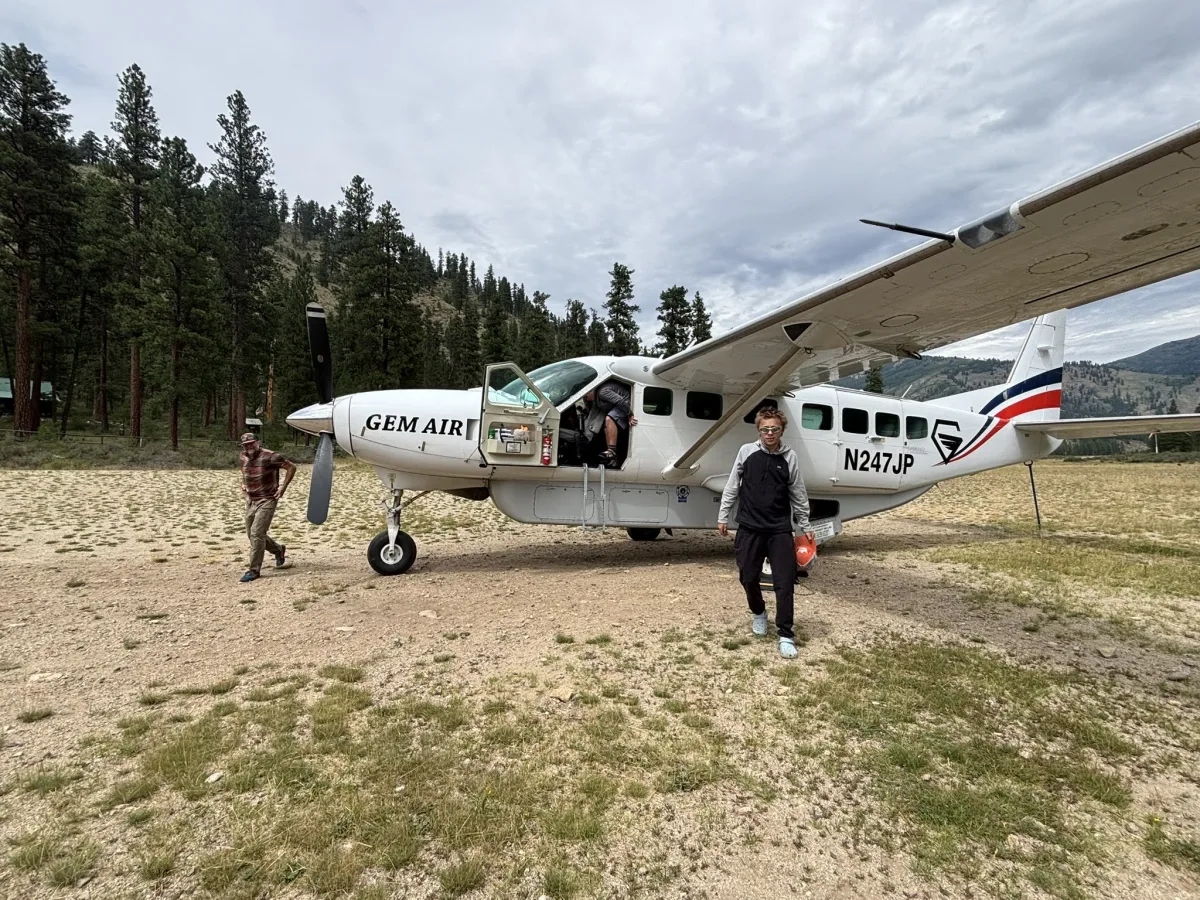
Before the trip, we estimated around that time of year and the area's low snowpack we would encounter flows around 1.5 feet, and our original plan was to deadhead the upper section the day before because we weren’t sure how low the river would get. We ended up getting lucky at around 2.21 feet, which was better than we expected, but we still made one decision that I would absolutely make again: we flew most of the heavy gear and several members of the group into Indian Creek.
Our coolers were averaging around 185 pounds each, and even with the better water, trying to move all of that plus a fully loaded crew through the upper 25 miles would have made that section much more difficult than it needed to be.
One of my favorite memories of the entire trip happened when I finally rowed into Indian Creek after those first 25 miles. My two boys were standing there waving and clearly excited to see me, while my fiancé was filming me coming in. After rowing that whole upper stretch by myself, it honestly felt a little like a Viking warrior returning home and getting a hero’s welcome.
It was probably more dramatic in my head than it looked from shore, but at the time it felt pretty great.
Into the Frank Church Wilderness
One of the things that is hard to appreciate until you are actually in it is just how remote the Middle Fork feels. The river runs for roughly 100 miles through the heart of the Frank Church–River of No Return Wilderness, a wilderness area of more than 2.3 million acres and the largest contiguous wilderness in the lower 48 states and one could easily fit Rhode Island and Delaware into the frank church river of no return wilderness. Once you are down in the canyon, there are long stretches where there are no roads, no easy way out, and very little connection to the outside world, which is part of what makes the trip feel so different from almost anything else you can do.
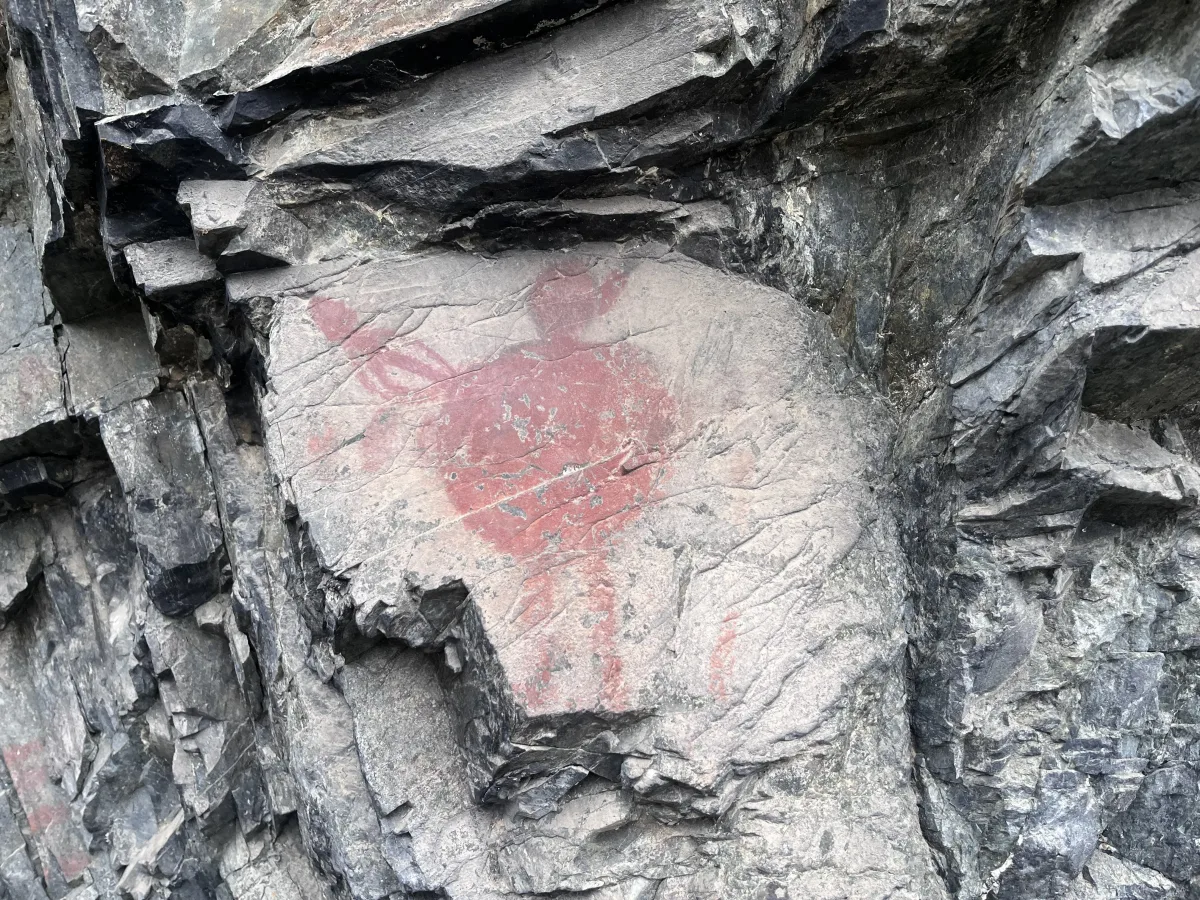
That remoteness also comes with a much deeper history than rafting. The Middle Fork of the Salmon River is the ancestral homeland of the Tukudeka (also spelled Tuka-Deka or Sheepeaters), a nomadic band of Mountain Shoshone. The region is also historically tied to the Shoshone-Bannock, Nez Perce (Nimiipuu), and Lemhi-Shoshone (Agaidika) tribes, who used the river corridor for hunting, fishing, and gathering. We often thought about those who lived in that wild place with wonder and amazement.
Seeing the cultural sites along the way made the canyon feel even bigger in a different sense, because you realize very quickly that we were only passing through for a week, while people have had a relationship with that river and landscape for generations. Between that history, the lack of roads, and the sheer scale of the country around you, there were plenty of moments when it really felt like we were a long way from everything.
The Camps, Hot Springs, Rapids, and Stops Along the Way
One of the things that made the trip so memorable was how different each camp and stop felt. Some were all about swimming and fishing, some were hot springs and relaxation, and others were memorable because the river decided to make sure we were still paying attention.
Marble Creek Right (Mile 31.7)
This was probably my favorite camp of the trip. It had a great swimming hole, good fishing, and a fun rapid just upstream, which gave the whole place a lot of energy. It was one of those camps where everyone seemed comfortable right away and nobody was especially eager to leave the next morning.
Sunflower (Mile 32.6)
We left later one morning to put a little distance between ourselves and some of the guided trips, then stopped at Sunflower. The waterfall there gave me what might honestly have been the best massage I have ever had. After several days of rowing, standing under that water felt better than anything you could book at a spa.
Pine Creek Flat (Mile 43.2)
Pine Creek Flat was hot and made us work for it a little. Getting gear up through the rocks after a long day on the river was not especially glamorous, but once everything was unloaded and camp was set up, it turned into a really nice place to spend the night.
Big Loon (Mile 49.3)
Big Loon had excellent fishing, hot springs, and somehow even ice cream, which felt completely ridiculous and wonderful after several days of living out of dry bags and coolers. It was one of those stops that made the trip feel less like a continuous push downriver and more like a collection of really unique experiences along the way.
Hospital Bar (Mile 52.1)
Hospital Bar was another favorite. We lucked out and did not get much wind ( the original name was Inhospitable due to the abundance of WIND at times ), the hot spring was hot and relaxing right on the river, and the area had a real sense of history and cultural significance. It was one of those places that reminded me the canyon has a much deeper human story than the river trip happening in front of us.
Flying B Ranch (Mile 66.5)
Flying B came at exactly the right time in the trip. We were able to get dinner and breakfast there, take hot showers, and get some much-needed rest, which felt pretty luxurious after several days of rowing, hauling gear, setting up camp, and living outside.
The kids spent a lot of time playing pool, while the adults had horseshoes, drinks, and a chance to sit around and relax without immediately thinking about the next camp setup or meal. It was a great reset in the middle of the trip and one of those stops where everyone seemed to exhale a little.
It was also one of the stranger nights of the trip. Pack mule livestock were grazing right around where we were camped, and at one point they got spooked and nearly ran over the top of our boys, who were sleeping under the stars. That got everyone's attention pretty quickly.
Then, while we were sleeping, a bear wandered through camp. The staff had been keeping an eye on it and were ready with a shotgun if they needed to scare it off, but luckily the bear moved on by itself. Between the livestock, the bear, the hot showers, the food, and the pool table, Flying B ended up being one of the most memorable stops of the entire trip for reasons we definitely did not expect.
Woolard Creek (Mile 74.9)
By the time we reached Woolard Creek, the river and canyon had changed quite a bit, and the group had settled into a really good rhythm. Boats got rigged faster, camp setup felt more automatic, and everyone knew where they fit into the process. It was a nice reminder of how much the whole group had come together over the course of the trip.
Devil's Tooth Rapid (Mile 93.2)
Devil's Tooth was one of the more challenging rapids for me, and before we even entered it we got a pretty good demonstration from the group immediately ahead of us of how not to run it. They hit the large rock just downstream from the Tooth and rode up onto its pillow, coming surprisingly close to flipping before finally getting clear.
Watching that definitely had my attention by the time it was our turn. Somewhere in the middle of making the move, one of my oars popped completely out of the oarlock, which is not an especially comforting feeling when you are already committed to a rapid. I managed to get it back into the lock just in time to keep rowing, and we came through without any real drama, but it was another one of those moments where things went from controlled to interesting very quickly.
The Rapids I’d Like Back
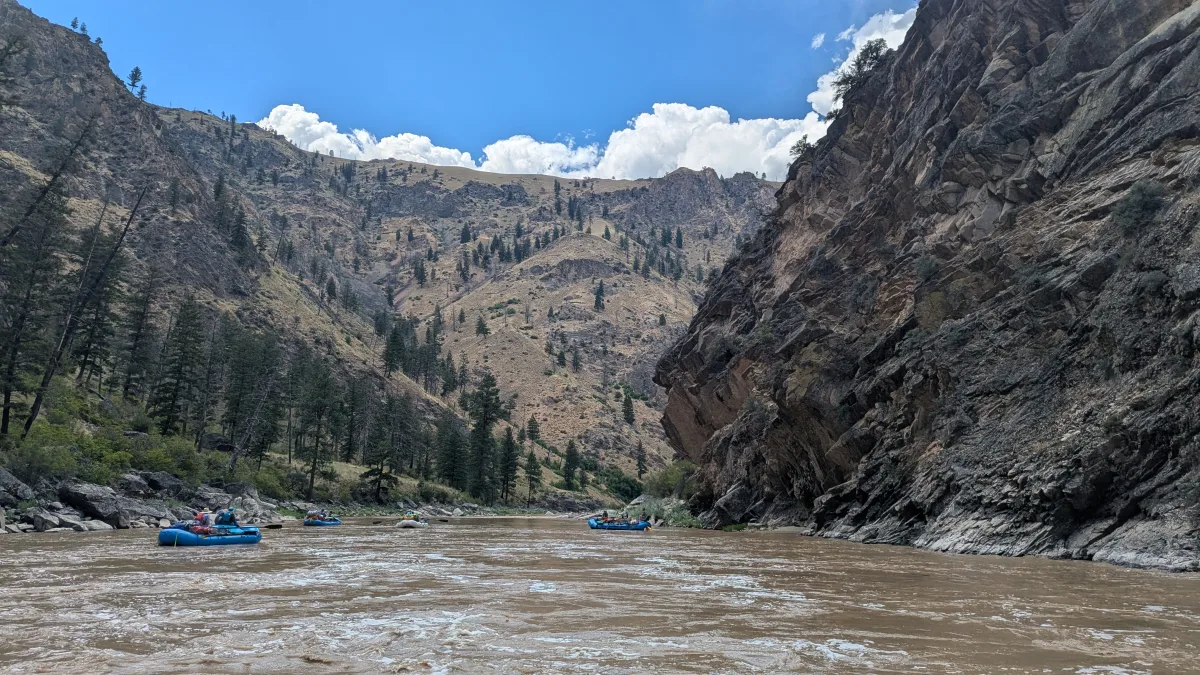
Most of the rapids went really well, but there were a few I would happily run again if somebody could rewind the trip for me.
Hells Half Mile (Mile 4.7)
At Hells Half Mile, I decided to try what I will generously call a spin-to-win strategy, and the river was not particularly impressed. Instead of maneuvering cleanly through the feature, I hit it pretty much in the middle of the boat, got knocked completely out of my seat, and while I was trying to get back into position my brother-in-law Mark arrived from behind and gave me a helpful little push.
Thanks, Mark ;)
That push sent me into several rocks, where I managed to get stuck for roughly ten minutes. There is nothing quite like sitting on a rock in the middle of a famous whitewater river while the rest of your group watches from downstream because it gives you plenty of time to reconsider your strategy and puts you in your place.
Velvet (Mile 5.3) and Cliffside (Mile 88.5)
At Velvet, I ended up hitting the wall on river right, which was a good reminder that sometimes the better move is to commit earlier and row harder instead of trying to finesse things at the last second.
Then there was Cliffside, also known as the Cheese Grater, where the sensible move was to go hard right and I decided to investigate the sportier option instead. We came closer to flipping there than anywhere else on the trip, and once again I was very grateful for the size and stability of my buddy's boat.
Despite my little master class in how not to run those rapids, everything turned out fine.
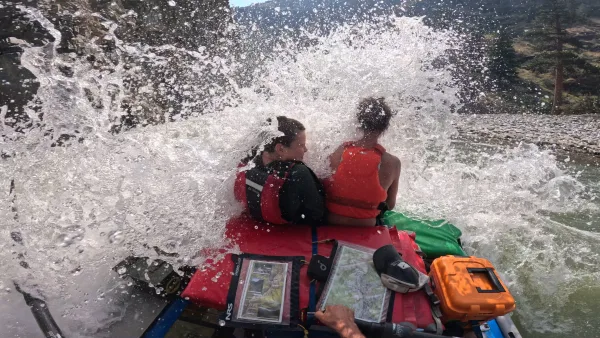
Cramer Creek and the Final Miles (Mile 99.5)
There were so many fun rapids on the trip that it is hard to pick a favorite, but Cramer Creek might have been the one. At our water level it was essentially a big, friendly wave train near the end of the trip, and after nearly 100 miles it felt like the perfect final rapid because there was nothing complicated about it, just line the boat up and let it rip.
The Group Made the Trip
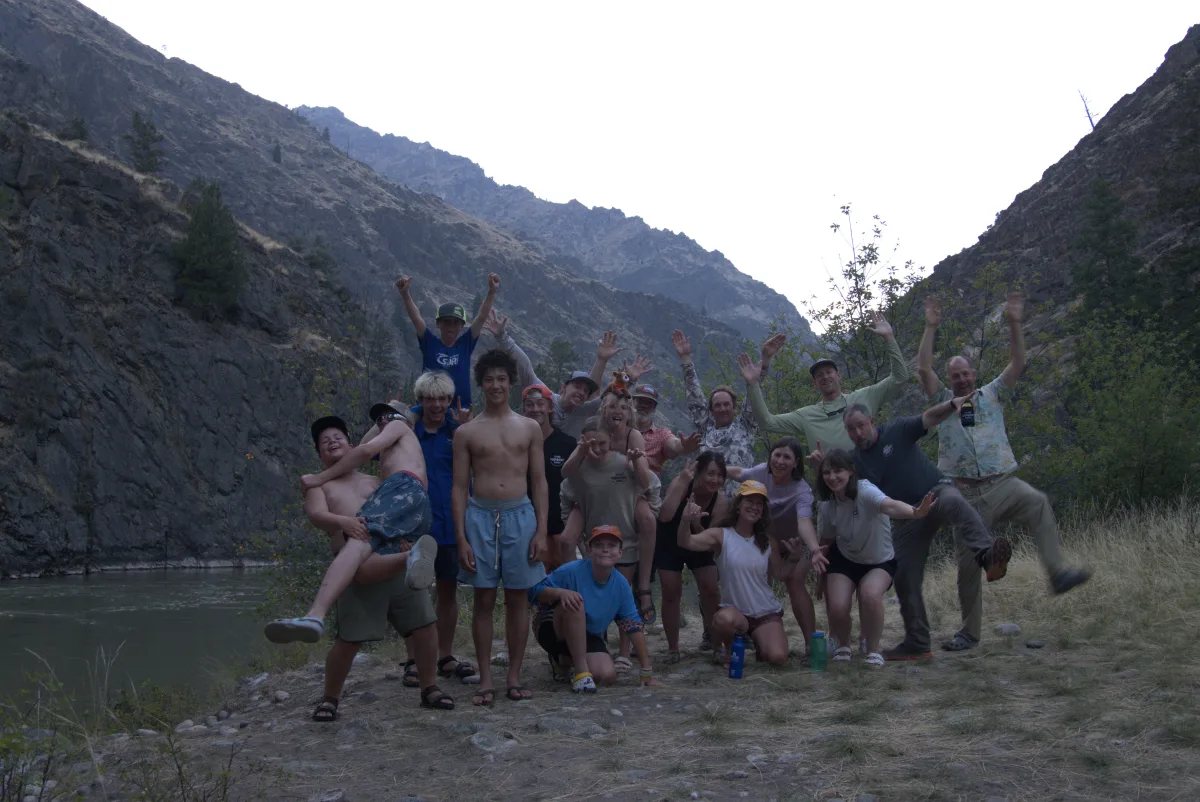
There were 19 of us total, including my beautiful fiancé, my two boys, ages 12 and 14, and four other families, and one of the best parts of the trip was how quickly everyone came together.
With that many people, boats, kids, coolers, dry boxes, tents, kitchen gear, and personal bags, things could have easily become chaotic, but instead people just found ways to help. Someone was always grabbing a strap, carrying a box, unloading a boat, setting up the kitchen, helping with dinner, or stepping in wherever something needed to happen.
The other families were awesome and a lot of fun to be around, and by the middle of the trip it felt less like five separate families and more like one big traveling river camp. The kids always had someone to hang out with, the adults genuinely enjoyed each other’s company, and every camp had its own energy.
Testing the Physical Boundaries
Before the trip, I knew the rowing would be physical, but what I underestimated was how much work everything else would be. Every morning meant breaking down camp, packing sleeping gear, hauling dry bags, moving boxes and coolers, rigging boats, and tightening straps, and then at the end of the day the whole process happened again in reverse.
By several days into the trip, everybody was tired in some way, and that is where a little grace really matters. Mistakes happen, people get tired or hungry, plans change, and emotions can run a little higher than they normally would at home.
One of the best things about our group was that people generally rolled with it. Somebody would make a mistake, somebody else would help fix it, and before long we were usually laughing about it instead of keeping score.
With 19 people and five families traveling together for days, that attitude mattered just as much as rowing ability.
Floating With Family Made It Better
Getting to experience the Middle Fork with my fiancé and my boys was a huge part of what made the trip special for me. At 12 and 14, the boys were old enough to really be part of the experience instead of simply being along for the ride, and there are not many opportunities anymore to spend that much uninterrupted time together without work, school, schedules, errands, and all the normal distractions of home.
Proud to watch my 14 year old row the boat with quickly gained rowing intuition and my 12 year old catch the biggest fish of the trip on a grasshopper dry fly.
For a week, your world gets pretty simple: the people you are with, the river in front of you, the camp you are trying to reach, and whatever is for dinner that night.
Looking back, I think that is what I will remember most, not just individual rapids or campsites, but the way everyone came together, how much fun the other families were, and how quickly a group of 19 people started functioning like one big river crew.
Would I Do It Again?
Tomorrow.
I would change a few things. I would bring a boat better rigged for a long expedition, lower the rowing seat, organize the rear gear differently, probably choose a different line through Hells Half Mile, definitely choose a different line through Cliffside, and give Velvet’s right wall a little more respect.
But that is part of what made the trip so good. The Middle Fork gave us beautiful camps, incredible fishing, hot springs, big canyon scenery, great rapids, a few humbling moments, and roughly 100 miles of having absolutely nowhere else we needed to be.
That is pretty hard to beat.