A stronger foundation for content, workflows, integrations, AI, and custom applications.
The modernization work did not replace Beacon just to chase a newer framework. It reorganized the platform around clearer responsibilities, reusable services, and better visibility into what the software is doing.
Shared platform core
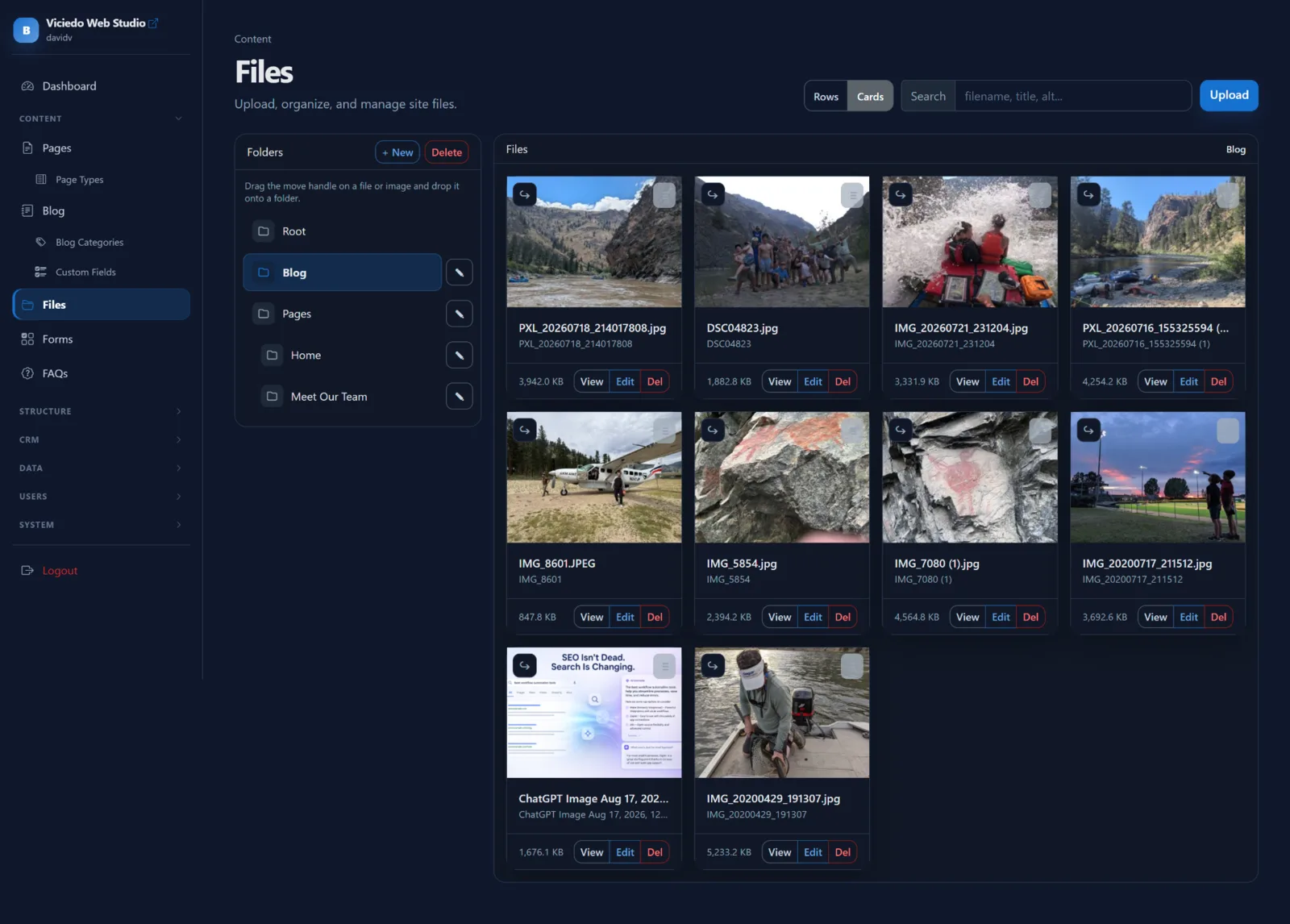
Content, files, permissions, events, jobs, search, AI, settings, and APIs can be provided as common capabilities instead of recreated inside individual modules.
Focused modules
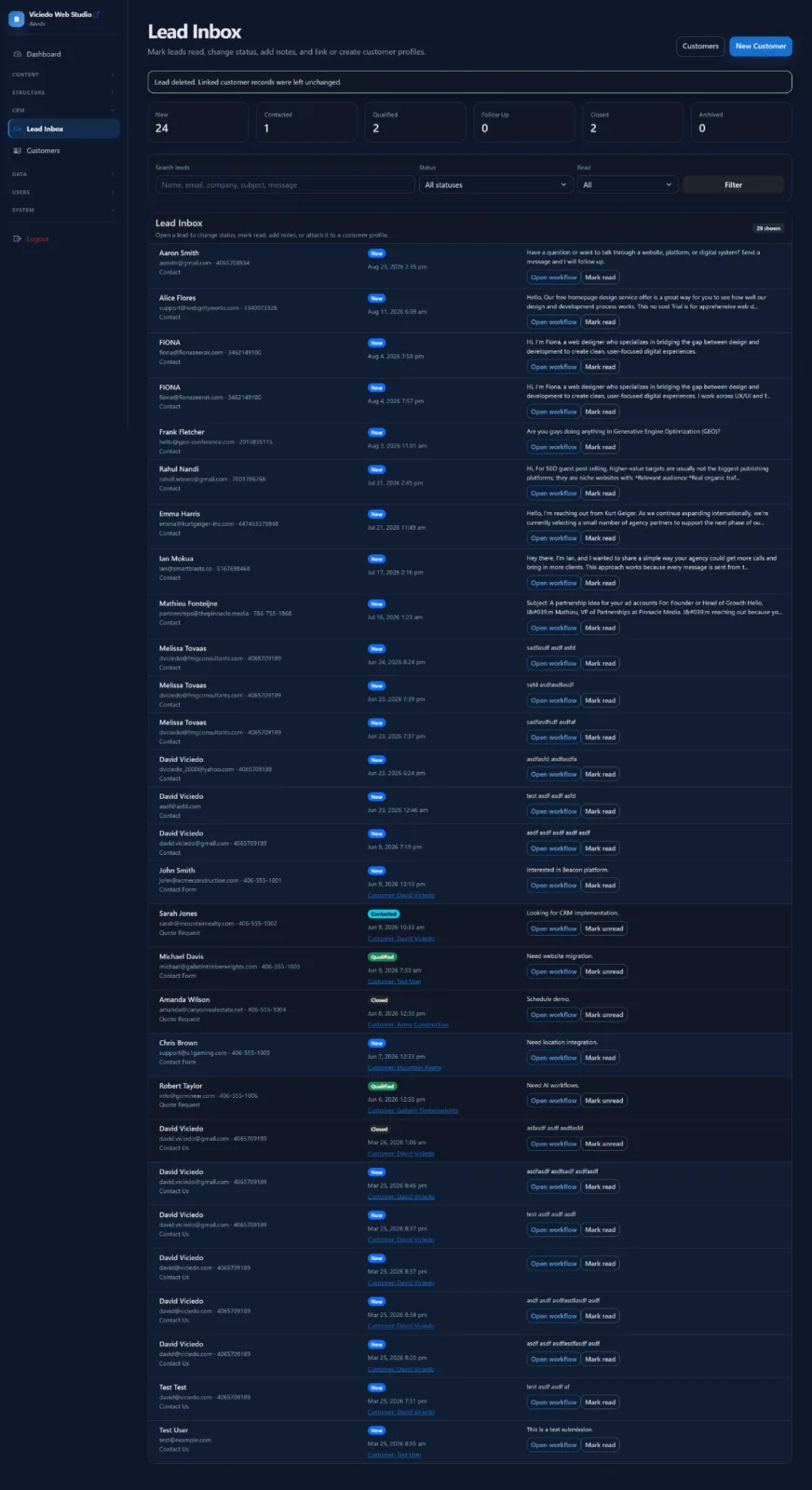
Pages, Blog, Forms, Customers, Navigation, Site Health, and custom modules can stay focused on the problem they solve.
Event-driven behavior
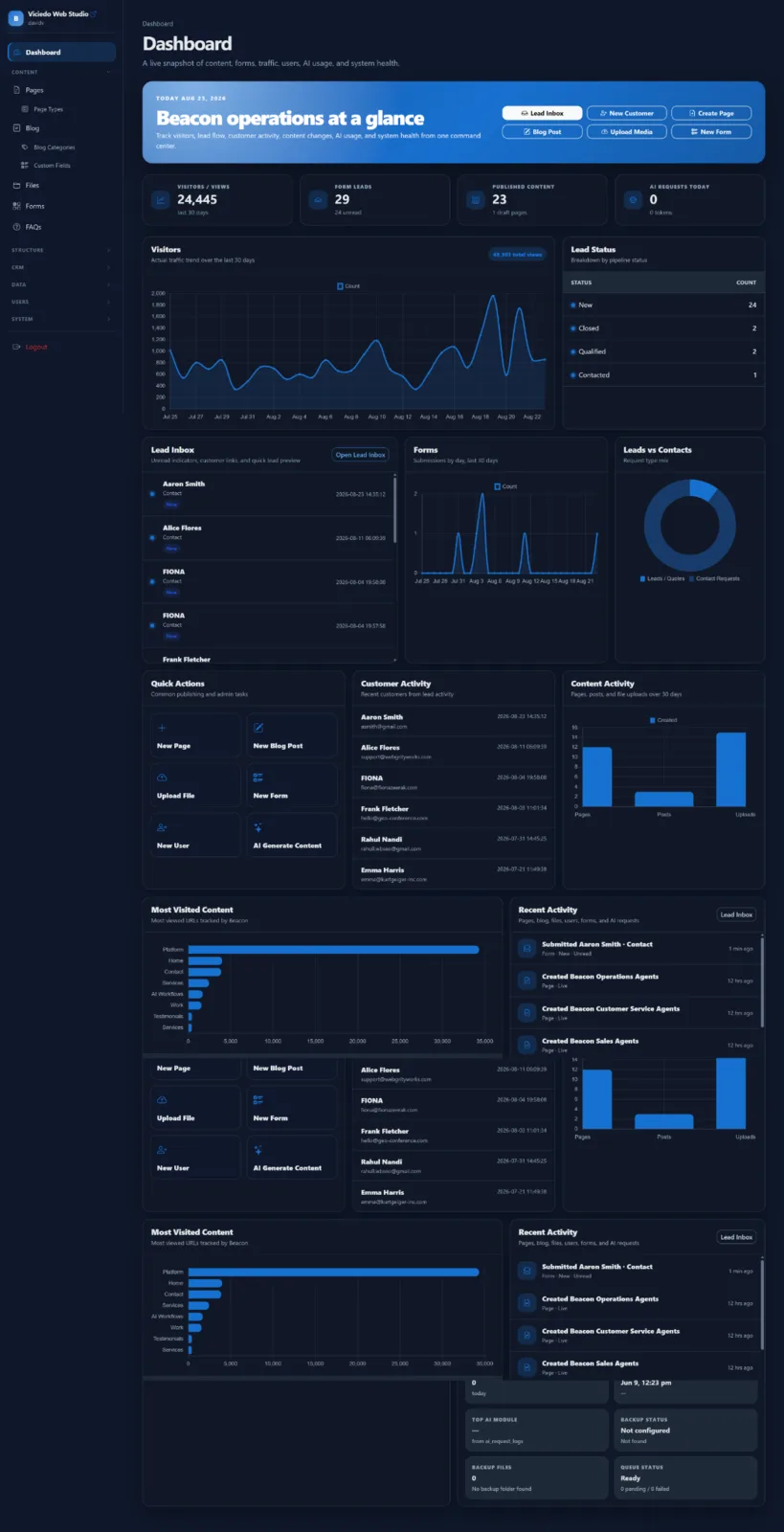
Publishing, form submissions, workflow changes, and other meaningful actions can trigger follow-up work without packing everything into one controller.
Background processing
Longer-running jobs such as AI, indexing, integrations, email, and document work can run outside the web request so the interface stays responsive.
AI as infrastructure
Prompts, context, knowledge, tools, usage tracking, guardrails, and evaluation can be shared across different Beacon features.
Versioned APIs
Reusable platform operations create a cleaner foundation for integrations, external applications, automation, and future agent tooling.
Observability & audit
Requests, API activity, jobs, AI work, and meaningful system changes can be traced instead of disappearing into unrelated logs.
Modular monolith
Beacon keeps strong internal boundaries without creating the deployment and operational overhead of unnecessary microservices.
Theme separation
Presentation can evolve independently from the shared content and operational services underneath it.
What this means for an organization using Beacon
- New modules can reuse proven services instead of rebuilding infrastructure.
- Custom functionality can remain focused on the workflow it was created to solve.
- Integrations have clearer interfaces and a versioned API foundation.
- Long-running work does not have to slow down normal page requests.
- AI tools can share the same knowledge, controls, usage tracking, and guardrails.
- System activity becomes easier to diagnose and audit as the platform grows.
The architecture itself is not the product.
What matters is that the next useful capability is easier to build, connect, maintain, and understand than the last one.
Talk about what Beacon could support for your organization →