Client work becomes harder to manage as the firm grows.
A small team can run surprisingly far on email, shared folders, spreadsheets, calendars, and memory. Eventually the cracks appear.
Client information gets fragmented
Contacts, conversations, documents, requirements, and history live in different places.
Projects depend on individual memory
People know what should happen, but the process is not visible to everyone.
Follow-up becomes inconsistent
Leads, proposals, approvals, deliverables, and recurring client needs become easy to miss.
Build around the client relationship.
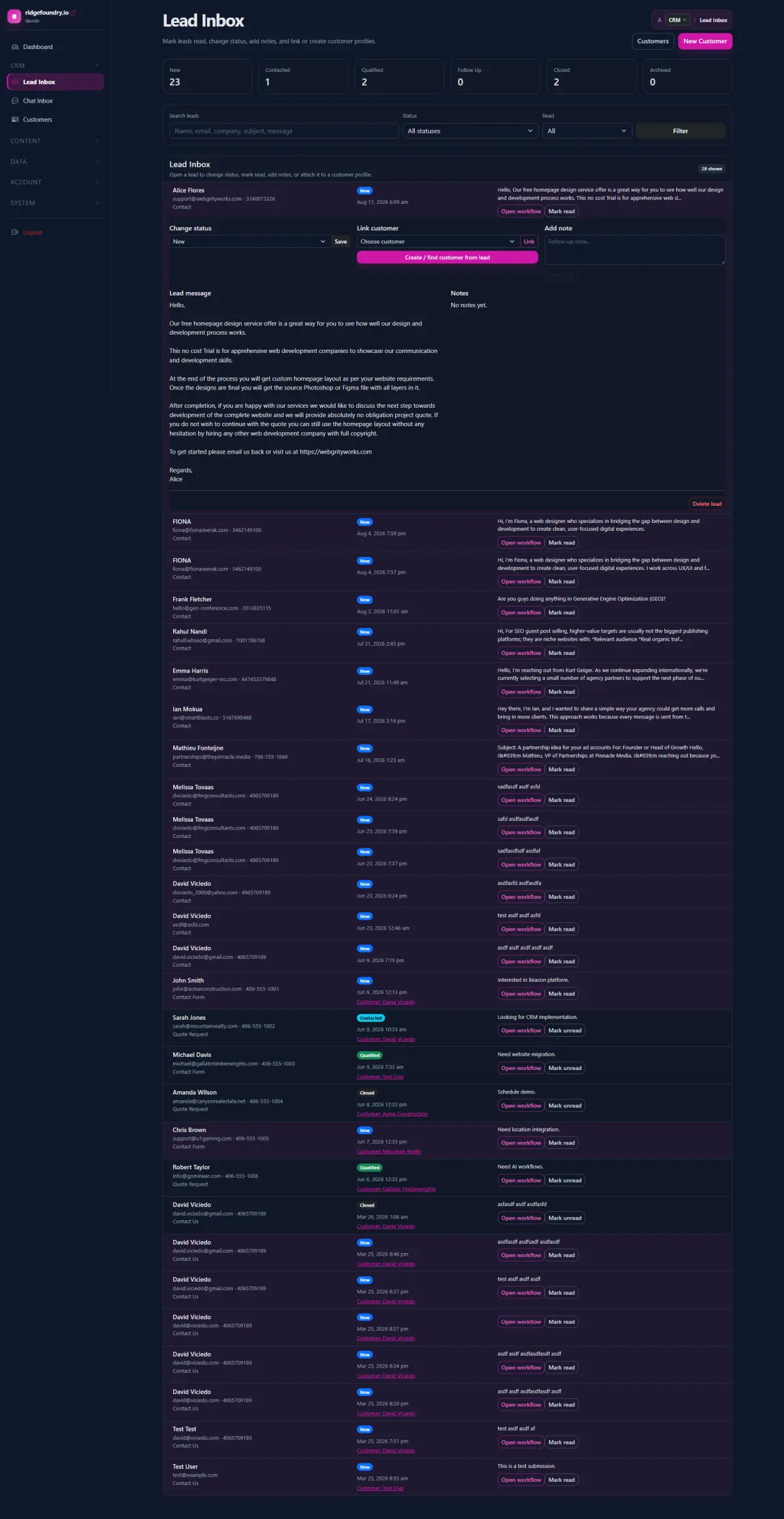
Leads & Intake
Capture inquiries and gather enough context before work begins.
Contacts & Organizations
Keep people, companies, relationships, notes, and history connected.
Projects & Engagements
Track active work, status, responsibilities, milestones, and related information.
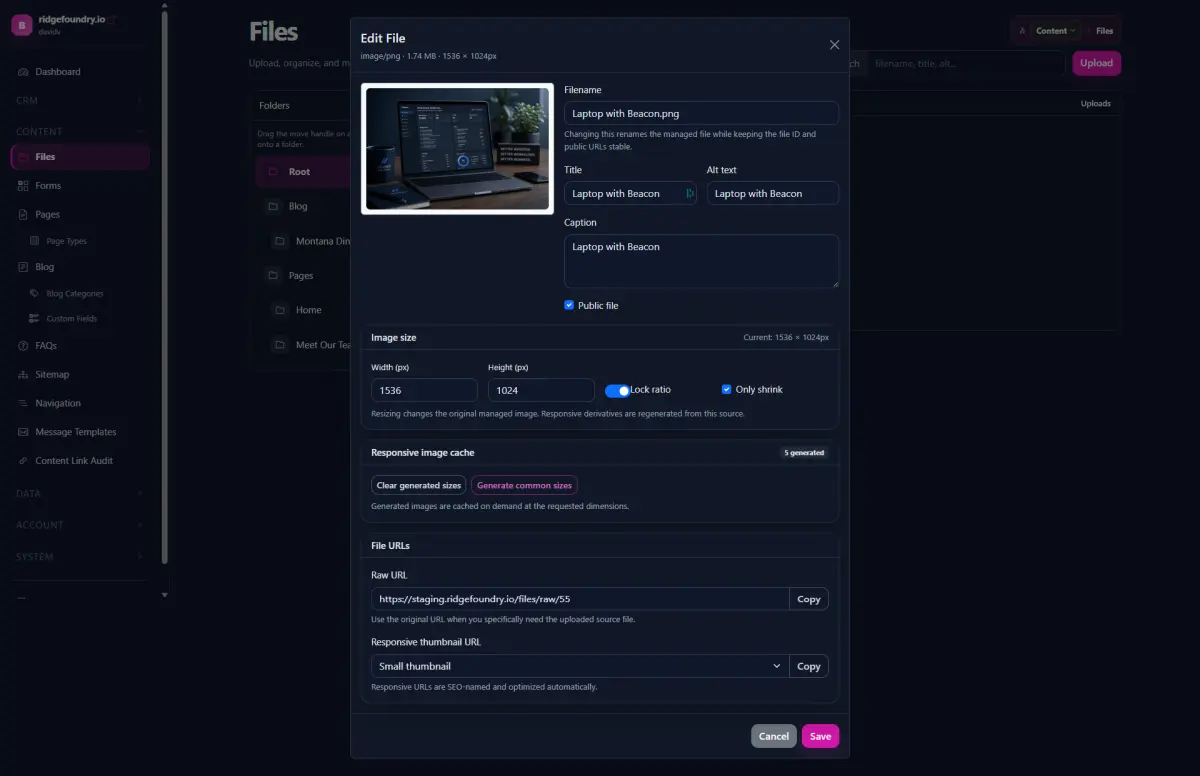
Documents & Files
Keep proposals, briefs, deliverables, supporting files, and correspondence tied to the right record.
Client Communication
Give staff useful context without searching multiple inboxes and applications.
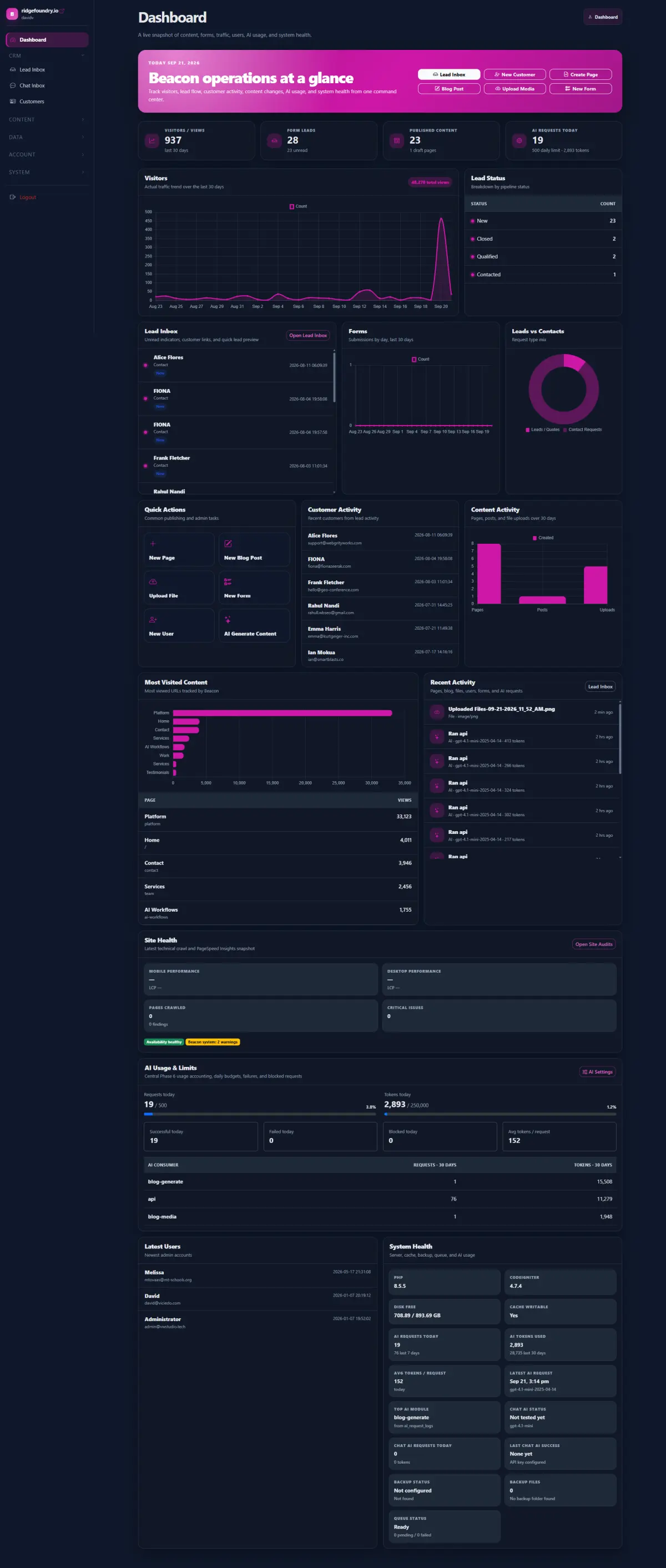
Reporting
See pipeline, active work, workload, status, and other useful operational information.
From inquiry to an ongoing client relationship.
Capture
Inquiry, referral, direct contact, or staff-entered lead.
Qualify
Understand the need and whether the engagement is a fit.
Deliver
Track work, communication, approvals, files, and status.
Continue
Retain history, follow up, and identify recurring needs.
Use AI to prepare the work, not replace the relationship.
Agents can summarize inquiries, bring together client context, watch projects for missing information, and prepare next actions while your people manage the relationship.
Sales Agent →
Research and qualify opportunities before someone follows up.
Customer Service Agent →
Gather context and prepare useful responses or next actions.
Operations Agent →
Watch projects and workflows for stalled work or missing information.
Is client work still being coordinated through inboxes and spreadsheets?
We can map the process and build a simpler operational layer around the tools your team already uses.